
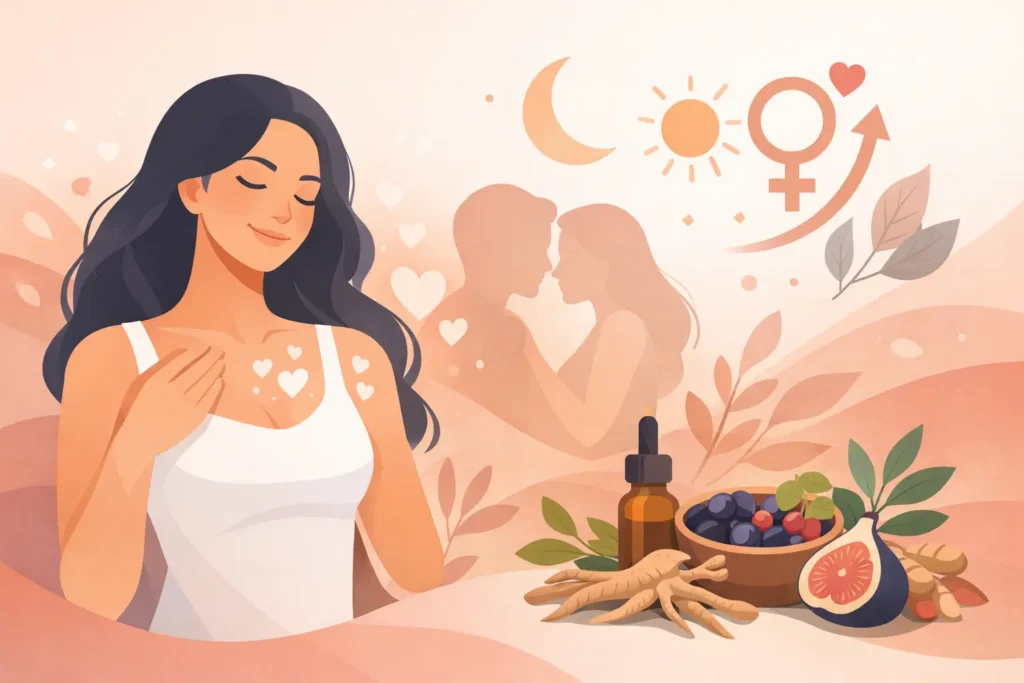
How to Make Women’s Libido Higher, Naturally
A lower sex drive is not a personal failure, and it is rarely explained by one thing. For women, desire can be affected by stress, relationship dynamics, sleep, hormones, physical comfort, body confidence, and the nonstop demands of daily life. Learning how to make women’s libido higher starts by letting go of the idea that she should simply be able to switch desire on at will.
A satisfying intimate life often begins before the bedroom. When a woman feels rested, comfortable in her body, emotionally connected, and free from pressure, arousal has more room to build. The goal is not to chase a version of desire that belongs to someone else. It is to support the natural conditions that help her feel present, responsive, confident, and open to pleasure.
How to Make Women’s Libido Higher by Looking at the Whole Picture
Libido is not just a hormone level or a number on a scale. It is a blend of mind, body, relationship, and lifestyle. Some women feel spontaneous desire, where interest appears before intimacy begins. Others experience responsive desire, where interest grows after affection, relaxation, touch, or emotional closeness. Both are normal.
That distinction matters because waiting to feel instantly in the mood can create unnecessary frustration. For many women, the first spark comes from feeling cared for, having enough time, and knowing there is no expectation to perform. Desire can grow once she feels safe, relaxed, and connected.
A partner can help by replacing pressure with curiosity. Ask what feels good, what helps her unwind, and what makes intimacy more enjoyable. These conversations may feel vulnerable at first, but they can create more trust than trying to guess what is missing.
Start With Energy, Stress, and Sleep
Stress is one of the fastest ways to crowd out libido. When the body is focused on deadlines, children, finances, caregiving, or a packed calendar, pleasure can feel like one more item on the to-do list. That does not mean a woman has lost her desire permanently. It may mean her nervous system needs a chance to come down from high alert.
Small changes can make a real difference. Protecting sleep, taking a walk, moving the body regularly, putting the phone away before bed, or creating a short transition between work and home can help restore mental space. Exercise can be particularly useful because it supports energy, mood, body confidence, and healthy circulation at the same time.
The answer is not always a major lifestyle overhaul. Sometimes it is as simple as choosing intimacy at a time when she is not exhausted, rushed, or mentally carrying tomorrow’s schedule. A slower evening can be more effective than trying to force passion into the last 10 minutes of a draining day.
Make Physical Comfort Part of the Conversation
Comfort is central to arousal. Vaginal dryness, irritation, pelvic discomfort, or pain during sex can cause a woman to pull away from intimacy even when she wants connection. This is a body response, not a lack of love or attraction.
More time for foreplay, gentler pacing, and a quality personal lubricant can reduce friction and make intimacy more enjoyable. Hydration, overall wellness, and sufficient arousal time can also support natural vaginal moisture. The body does not always respond on a schedule, especially during periods of stress, after childbirth, while breastfeeding, or around perimenopause and menopause.
Persistent pain, bleeding, burning, or a sudden major change in comfort deserves medical attention. A gynecologist or qualified health professional can help identify issues such as infections, pelvic floor concerns, hormonal changes, medication effects, or skin conditions. Getting answers can be a powerful step toward reclaiming confidence and pleasure.
Support Arousal Through Healthy Circulation
Arousal is physical as well as emotional. When a woman becomes aroused, blood flow increases to genital tissue, which can support sensitivity, warmth, swelling, and natural moisture. This process is part of healthy microcirculation, the movement of blood through the body’s smallest vessels.
Lifestyle habits that support cardiovascular health can also support sexual wellness. Regular movement, adequate rest, balanced meals, limiting smoking, and managing chronic stress all contribute to circulation and energy. These habits are not flashy, but they build a stronger foundation for vitality.
Some adults also choose natural sexual-wellness supplements as part of their routine. A women-focused option such as Purrl for Her may appeal to those who want convenient support for arousal, sensitivity, and vaginal moisture without making a daily regimen more complicated. Natural does not automatically mean right for everyone, so review the ingredients carefully and speak with a health professional if you are pregnant, nursing, managing a condition, or taking medications.
Create More Space for Connection
Long-term relationships can be loving and still become overly practical. Couples coordinate schedules, pay bills, handle family responsibilities, and fall into routines. Intimacy may be pushed aside not because attraction has disappeared, but because connection has not had protected time.
That does not require elaborate date nights every week. It can begin with 20 uninterrupted minutes, a shared shower, an affectionate touch with no expectation attached, or a conversation that is not about logistics. Consistent nonsexual affection helps many women feel emotionally close, which can make sexual interest easier to access later.
For couples, this is also an opportunity to change the definition of a successful intimate moment. It does not have to lead to sex every time. Kissing, massage, cuddling, playful conversation, and exploring what feels pleasurable can all strengthen connection. When the pressure for a particular outcome fades, desire often has more room to show up.
Let Novelty Work in Your Favor
Routine brings security, but too much predictability can flatten excitement. A small change in timing, setting, pace, music, or the kind of affection you share can make intimacy feel more intentional. Novelty does not have to be dramatic or outside anyone’s comfort zone.
The best changes are the ones that feel authentic. Maybe it is planning an evening without screens, wearing something that makes her feel attractive, taking more time to flirt during the day, or trying a different kind of massage. The point is not to copy anyone else’s idea of sexy. It is to reconnect with the parts of intimacy that feel playful, personal, and alive.
Body confidence belongs here, too. Many women struggle to be present because they are thinking about how they look instead of what they feel. A supportive partner can make a meaningful difference through sincere compliments, patience, and attention that makes her feel desired rather than judged.
Check Hormones, Medications, and Health Changes
If lower libido has lasted for months, feels distressing, or appeared suddenly, it is worth looking beyond lifestyle alone. Hormonal transitions can affect desire and vaginal comfort. Birth control, antidepressants, blood pressure medications, and other prescriptions may also influence sexual response for some people.
Depression, anxiety, thyroid conditions, diabetes, chronic pain, and fatigue can all play a role. None of this means intimacy is out of reach. It means the solution may need to be more personal than generic advice. A clinician can review symptoms, medications, and treatment options without judgment.
Be direct in that conversation. Saying, “My sex drive has changed and it is affecting my quality of life,” gives a provider useful information. Sexual wellness is part of overall wellness, and women deserve to have it taken seriously.
Give Desire Time to Return
There is no single timeline for feeling more interested in sex. A woman may notice improvement after better rest and more intentional connection. Another may need to address pain, stress, medication changes, or unresolved relationship tension first. It depends on what her body and life are asking for.
The most helpful approach is patient and proactive: create comfort, protect energy, support healthy circulation, communicate honestly, and seek medical guidance when something feels off. Pleasure is not a luxury or an obligation. It is a meaningful part of the joy of living and loving, and it deserves care, attention, and room to grow.