
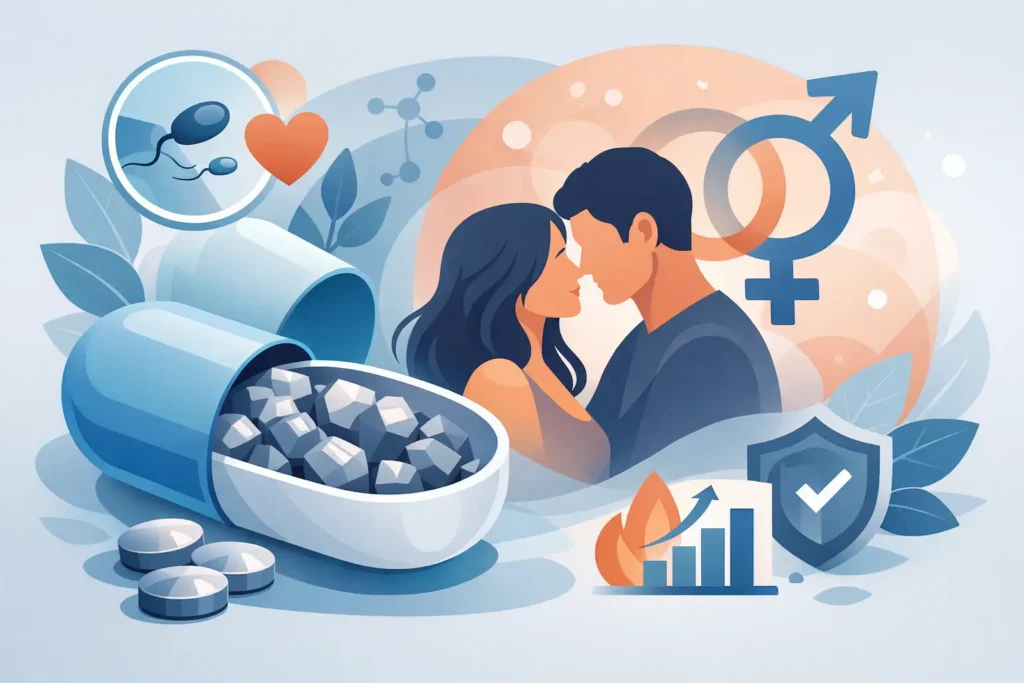
Zinc Benefits for Sexual Health That Matter
A dip in desire, changes in arousal, or less confidence in the bedroom can feel personal, but the body often gives clues long before intimacy is affected. Nutrition is one of those clues. The zinc benefits for sexual health are worth understanding because this essential mineral helps support several systems connected to libido, reproductive health, energy, and normal hormone function.
Zinc is not a magic switch for desire or performance. It will not replace a conversation with a healthcare professional when symptoms are persistent or sudden. But when someone is not getting enough, correcting that gap can support the natural processes that help both men and women feel more energized, responsive, and connected.
Why Zinc Benefits for Sexual Health Get Attention
Zinc is involved in hundreds of enzyme reactions throughout the body. It contributes to immune function, cell growth, wound healing, DNA production, and the way the body uses nutrients. Sexual wellness sits within that bigger picture. Desire and arousal are influenced by hormones, circulation, mood, sleep, stress, relationship dynamics, medications, and overall health. Zinc supports a few meaningful pieces of that equation.
For men, zinc is closely tied to normal testosterone production and reproductive function. Low zinc status has been associated with lower testosterone in some settings, particularly when a true deficiency is present. Testosterone is not the only driver of libido or erection quality, but it does play a role in sexual interest, energy, sperm production, and sexual function.
For women, zinc supports normal reproductive health, cell repair, and immune health. Those foundations matter for comfort and confidence. Healthy sexual response also depends on feeling well rested, emotionally safe, adequately nourished, and able to relax into pleasure. No mineral can create chemistry on its own, but the right nutritional baseline gives the body more support to do what it is designed to do.
How Zinc May Support Men’s Sexual Wellness
A man who is low in zinc may experience broad signs such as fatigue, reduced appetite, frequent illness, slow wound healing, or changes in taste and smell. Sexual concerns can sometimes be part of the picture, especially if low testosterone or poor overall nutrition is also involved.
Hormones, libido, and reproductive function
The clearest connection between zinc and male sexual health is its role in normal hormone and sperm function. The testes contain relatively high levels of zinc, and the mineral is involved in sperm development and semen quality. Adequate intake supports the body’s ability to maintain normal testosterone levels, especially compared with the effect of being deficient.
That distinction matters. Taking extra zinc when your intake is already adequate does not reliably raise testosterone above your natural healthy range. More is not automatically better. The real opportunity is making sure a nutritional shortfall is not quietly working against your energy, confidence, or desire.
Erection quality is bigger than one nutrient
Erections depend heavily on healthy blood flow, nerve signaling, arousal, and emotional well-being. Zinc does not work like a prescription medication for erectile dysfunction, and it should not be presented as one. Still, sufficient nutrition supports the systems behind sexual performance, including cardiovascular health and normal hormone balance.
If erection changes are new, ongoing, or accompanied by chest pain, shortness of breath, diabetes, high blood pressure, or low mood, it is wise to speak with a clinician. Sexual changes can be an early signal that deserves real attention, not silence.
What Zinc Can Mean for Women’s Sexual Wellness
Women’s sexual desire and comfort are often discussed too narrowly. Arousal is not just about libido. It can be affected by stress, hormonal shifts, postpartum recovery, menopause, pain, medications, body image, relationship connection, and everyday exhaustion. Zinc belongs in a wider wellness conversation rather than being sold as a one-step solution.
Zinc helps support normal cell division and tissue repair, which are relevant to healthy skin and mucosal tissues throughout the body. It also plays a role in reproductive health and normal immune function. When a woman is undernourished or deficient in key nutrients, energy and desire may be among the many things that feel off.
Adequate zinc may therefore support the conditions for feeling more like yourself: steady energy, normal hormonal function, and confidence in your overall well-being. For vaginal dryness, pain during sex, significant changes in desire, or bleeding, a healthcare professional can help identify the cause. Depending on life stage and symptoms, the best answer may involve hydration, lubrication, hormone support, medication changes, pelvic-floor care, stress reduction, or a combination of approaches.
Food First: The Most Reliable Way to Get Zinc
For most adults, food is the best place to start. Zinc from a varied diet comes packaged with protein, healthy fats, iron, B vitamins, and other nutrients that also support vitality. Oysters are especially rich in zinc, which is one reason they have earned a long-standing place in conversations about romance and reproductive health.
Other useful sources include beef, crab, poultry, dairy products, eggs, beans, lentils, pumpkin seeds, cashews, and fortified cereals. Plant foods can contribute meaningful zinc, although compounds called phytates can reduce absorption. Soaking, sprouting, fermenting, and eating a varied plant-based diet can help. Vegetarians and vegans may need to pay closer attention to their overall intake.
A satisfying plate that supports sexual wellness does not have to be complicated. Think protein at meals, colorful produce, whole grains or legumes, healthy fats, and enough fluids. That approach helps circulation, stable energy, and mood alongside nutrient intake.
Should You Take a Zinc Supplement?
A supplement can be practical when diet is limited, lab work or a clinician suggests deficiency, or a person has a higher risk of not absorbing enough zinc. People with digestive disorders, heavy alcohol use, restrictive eating patterns, or certain medical conditions may be more vulnerable to low levels.
The recommended dietary allowance for zinc is 11 milligrams daily for adult men and 8 milligrams daily for adult women. Needs increase during pregnancy and breastfeeding. The tolerable upper limit for most adults is 40 milligrams a day from all sources unless a clinician recommends otherwise.
That upper limit deserves respect. High-dose zinc taken regularly can cause nausea, stomach upset, headaches, and changes in taste. Over time, it can lower copper levels, which may contribute to anemia and nerve problems. Zinc can also interact with certain antibiotics and other medications, so timing and dosage matter.
Choose a product with a clearly labeled amount of elemental zinc, and avoid stacking several supplements without checking the total. A multivitamin, immune product, and separate zinc capsule can add up faster than expected. If you are considering zinc for fertility, low libido, or ongoing sexual concerns, ask a healthcare professional for personalized guidance rather than guessing.
Put Zinc in a Bigger Intimacy Plan
The most meaningful zinc benefits for sexual health show up when zinc is part of a lifestyle that supports the whole person. Movement improves cardiovascular health and circulation. Sleep supports mood and hormone regulation. Managing stress creates more room for desire. Honest communication can turn pressure into connection.
For couples and individuals looking for a convenient, natural addition to a wellness routine, Ching-A-Ling can fit into a broader approach focused on arousal, confidence, and circulation. It is still smart to read the ingredient label, follow directions, and avoid treating any supplement as a replacement for medical care.
Sexual wellness is not about chasing perfection or performing on demand. It is about having the energy, comfort, confidence, and connection to enjoy intimacy on your own terms. Give your body the nourishment it needs, pay attention to changes that persist, and make room for the pleasure and vitality that belong in a fulfilling life.