
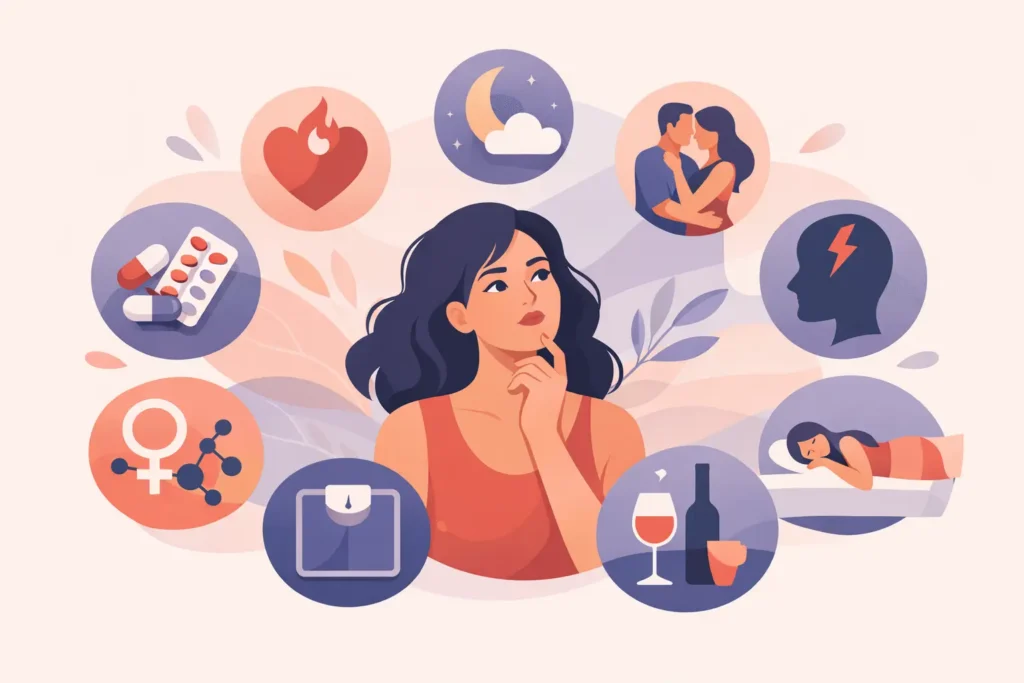
What Affects Women’s Libido? 8 Common Factors
A woman can feel deeply attracted to her partner and still have little interest in sex after a draining week, a poor night of sleep, or a difficult conversation. Desire is not a switch that stays on or off forever. When people ask what affects women’s libido, the real answer is usually a mix of body chemistry, emotional well-being, relationship dynamics, and everyday life.
That is normal. Libido can rise and fall across a month, a season, or a relationship. The goal is not to force yourself into a certain mood. It is to understand what your body may be asking for – more rest, more comfort, more connection, medical support, or simply less pressure.
What Affects Women’s Libido? Start With the Whole Picture
Women’s desire is often responsive rather than spontaneous. In other words, some women do not feel desire before closeness begins. They may feel interested after they feel relaxed, safe, touched, appreciated, and physically comfortable. That is not a problem to fix. It is one of many healthy ways desire can work.
Libido also does not live in one place. Hormones matter, but so do stress levels, confidence, vaginal comfort, medications, relationship quality, and whether there is enough room in the day to feel like a person instead of everyone else’s manager. Looking at only one factor can leave the bigger picture unseen.
1. Hormone Changes Can Shift Desire
Estrogen, testosterone, progesterone, and other hormones all play a role in sexual interest, sensitivity, mood, and vaginal tissue health. Natural shifts during the menstrual cycle may make some women feel more interested in intimacy at certain times of the month and less interested at others.
Pregnancy, postpartum recovery, breastfeeding, perimenopause, and menopause can bring more noticeable changes. Lower estrogen, for example, may contribute to dryness or discomfort, which can make desire harder to access even when emotional interest is there. Some women also notice changes after starting, stopping, or changing hormonal birth control.
Hormones are only one part of the story, but persistent changes are worth discussing with a qualified healthcare professional. There may be options that support comfort, reproductive health, and your overall quality of life.
2. Stress and Mental Load Can Crowd Out Arousal
A busy mind rarely flips easily into a sensual one. Work pressure, financial concerns, caregiving, household responsibilities, and the endless mental checklist can leave the nervous system in survival mode. When your body feels rushed or on alert, intimacy may feel like one more task instead of a source of pleasure.
This is not a failure of attraction or love. It is a signal that your energy is being pulled in too many directions. Small changes can help: protecting a little decompression time, sharing responsibilities more fairly, putting the phone away, or creating a transition between the day and private time.
For couples, this can require an honest conversation. “I miss feeling close to you” lands very differently than “Why don’t you want sex?” The first opens a door. The second can add pressure, which usually makes libido retreat further.
3. Sleep, Energy, and Everyday Health Matter
Low desire is sometimes less about sex and more about exhaustion. Poor sleep affects mood, stress hormones, energy, and patience. A woman who has been waking up several times a night may not need a lecture about passion. She may need rest.
Nutrition, hydration, regular movement, and alcohol use can also influence how energized and connected to your body you feel. Movement is especially valuable because it can support mood, circulation, body confidence, and stress relief. It does not have to mean an intense workout. A walk, a dance class, stretching, or any activity you genuinely enjoy can be part of feeling more at home in your body.
Certain health conditions may affect libido as well. Thyroid disorders, diabetes, chronic pain, depression, anxiety, and fatigue-related conditions can all influence desire directly or indirectly. Addressing the underlying issue is often more helpful than trying to push past it.
4. Medications May Be Part of the Conversation
Some prescription medications can affect sexual interest, arousal, or the ability to feel pleasure. Antidepressants, certain blood pressure medications, allergy medications, and some forms of hormonal contraception are common examples, though every person responds differently.
If your libido changed around the time you started a medication, do not stop taking it on your own. Bring it up with your prescriber. Sexual well-being is part of health, and you deserve a conversation that treats it that way. A dosage adjustment, a different medication, or another strategy may be possible.
5. Physical Comfort Changes the Experience
Desire has a hard time building when intimacy is uncomfortable. Vaginal dryness, irritation, pain during sex, pelvic-floor tension, infections, or recovery after childbirth can all make the body brace rather than relax.
Comfort is not optional, and pain is not something to simply tolerate for the sake of a partner. Slowing down, using adequate lubrication, allowing more time for arousal, and communicating clearly about what feels good can make a meaningful difference. Ongoing pain, bleeding, burning, or sudden changes should be evaluated by a healthcare professional.
Gentle support for circulation and arousal may fit into some adults’ wellness routines, too. Products such as Purrl for Her are designed around natural-ingredient support for sensitivity and vaginal moisture, but they are not a replacement for medical care when pain or a health concern is involved.
6. Relationship Connection and Communication Shape Desire
Emotional closeness can be a powerful part of sexual desire, especially in long-term relationships. Feeling respected, wanted, listened to, and appreciated outside the bedroom often affects what happens inside it.
That does not mean every intimate moment needs to begin with a deep conversation. It means resentment, unresolved conflict, criticism, betrayal, and unequal household labor can quietly affect desire over time. A partner who wants more intimacy may need to look beyond the bedroom and ask: Do we feel like a team? Do we make each other feel desired? Is there space for affection that does not automatically lead to sex?
For some couples, scheduled date time or planned intimacy can sound unromantic at first. Yet protecting time for connection can be surprisingly freeing when life is full. The plan does not have to include sex. It can simply create room for closeness without distractions or expectations.
7. Body Image and Sexual Confidence Have Real Influence
Many women carry a running inner commentary about how they look, whether they are desirable, or whether their body has changed. That self-consciousness can pull attention away from sensation and into performance anxiety.
Confidence is not about meeting a narrow beauty standard. It is about being able to stay present in your own body. Wearing something that makes you feel attractive, choosing lighting that helps you relax, asking for the kind of touch you enjoy, and letting go of the need to perform can all support a more positive experience.
A supportive partner matters here. Genuine compliments, patience, affection, and curiosity create a far better atmosphere than comparison or pressure. Feeling desired should never depend on looking a certain way.
8. Life Stages and Expectations Can Put Desire Under Pressure
New parenthood, career changes, grief, aging, illness, moving, and major stress can all change a couple’s rhythm. Libido may be lower for a while, then return in a different form. Comparing your current desire to the early days of a relationship can create unnecessary worry.
It also helps to separate libido from obligation. You do not owe anyone sex because you are married, dating, or have said yes in the past. Consent, comfort, and mutual enthusiasm are the foundation of satisfying intimacy. When pressure leaves the room, desire often has more space to return.
When to Get Extra Support
A temporary dip in desire is common. But if low libido feels distressing, lasts for months, comes with pain, or appears alongside mood changes, fatigue, menstrual changes, or relationship strain, reach out for support. A primary care clinician, gynecologist, pelvic-floor specialist, or qualified therapist can help identify what is going on.
Bring specifics to the conversation: when the change began, any medication changes, physical symptoms, stressors, and whether the issue is desire, arousal, comfort, orgasm, or all of the above. Clear details make it easier to find the right next step.
Your intimate life is allowed to change, and it is allowed to matter. Give yourself permission to be curious instead of critical. With honest communication, attention to your well-being, and support when you need it, pleasure and connection can become something you welcome again – on your own terms.